How to Unclog a Dishwasher Drain Hose: Step-by-Step Fix
Dishwasher drain hose clogged? Here’s how to clear it yourself in 20 minutes — no special tools, works on all brands including Bosch, Frigidaire, and Whirlpool.
Two years after we installed the Frigidaire Gallery, I finally traced a slow-drainage problem to the drain hose itself — not the filter, not the pump, but a grease buildup inside the hose that had been narrowing for months until water could barely push through it. The hose looked fine from the outside. It was the inside that was the problem.
To unclog a dishwasher drain hose: disconnect it at the garbage disposal or sink drain tailpiece, blow through it to confirm a blockage, then flush it with a garden hose from the disposal end or run a flexible bottle brush through it. The whole job takes about 20 minutes and requires no special tools. Reinstall with the high loop intact.
Tools and materials needed
- Old towels or rags (water will spill)
- A bucket or shallow pan
- Pliers or a flat-head screwdriver (for hose clamps)
- A flexible bottle brush or drain snake (optional but helpful)
- Access to a garden hose or utility sink
Step 1: Confirm the hose is the problem before disconnecting anything
Before pulling the hose, spend 60 seconds ruling out two things that look identical but have different fixes.
Run the disposal for 30 seconds — a clogged disposal backs water into the dishwasher the same way a blocked hose does, and it’s a 30-second fix versus a 20-minute one. If the dishwasher drains after running the disposal, the hose was fine. Then open the cabinet under the sink and look at the hose routing. A fully kinked hose — bent flat by something stored under the sink — causes complete drainage failure and straightens out in under a minute. If the hose has a sharp bend, straighten it first and run a test cycle.
If neither of those solves it, the hose itself is clogged and you need to proceed with disconnection and cleaning.
Step 2: Prepare for water spillage
The drain hose holds residual water — usually a cup or two. Have towels on the cabinet floor and a shallow bucket positioned under the connection point before you disconnect anything. On our Frigidaire the hose connects to the left side of the garbage disposal at a barbed inlet fitting — when I pulled the hose off the first time, about half a cup of dirty water came out faster than I expected. Turn the dishwasher off at the circuit breaker or unplug it before doing anything involving the hose connections.
Step 3: Disconnect the hose at the disposal or drain end
The drain hose connects to one of two places under your sink. If you have a garbage disposal: the hose connects to the inlet port on the side of the disposal body, held by a hose clamp. Use a flat-head screwdriver or nut driver to loosen the clamp screw, then twist and pull the hose free. If you drain to the sink tailpiece: the hose connects to a fitting on the drain pipe, also held by a clamp — same process.
You don’t need to disconnect the hose at the dishwasher end unless you suspect the clog is in the first foot of hose near the pump outlet. In most cases the blockage is in the middle section or at the connection point where grease accumulates most heavily.
Step 4: Test and clear the blockage
With the hose disconnected at the disposal end, blow through it from the dishwasher end. You should feel air move freely. Significant resistance — or no airflow at all — confirms a clog.
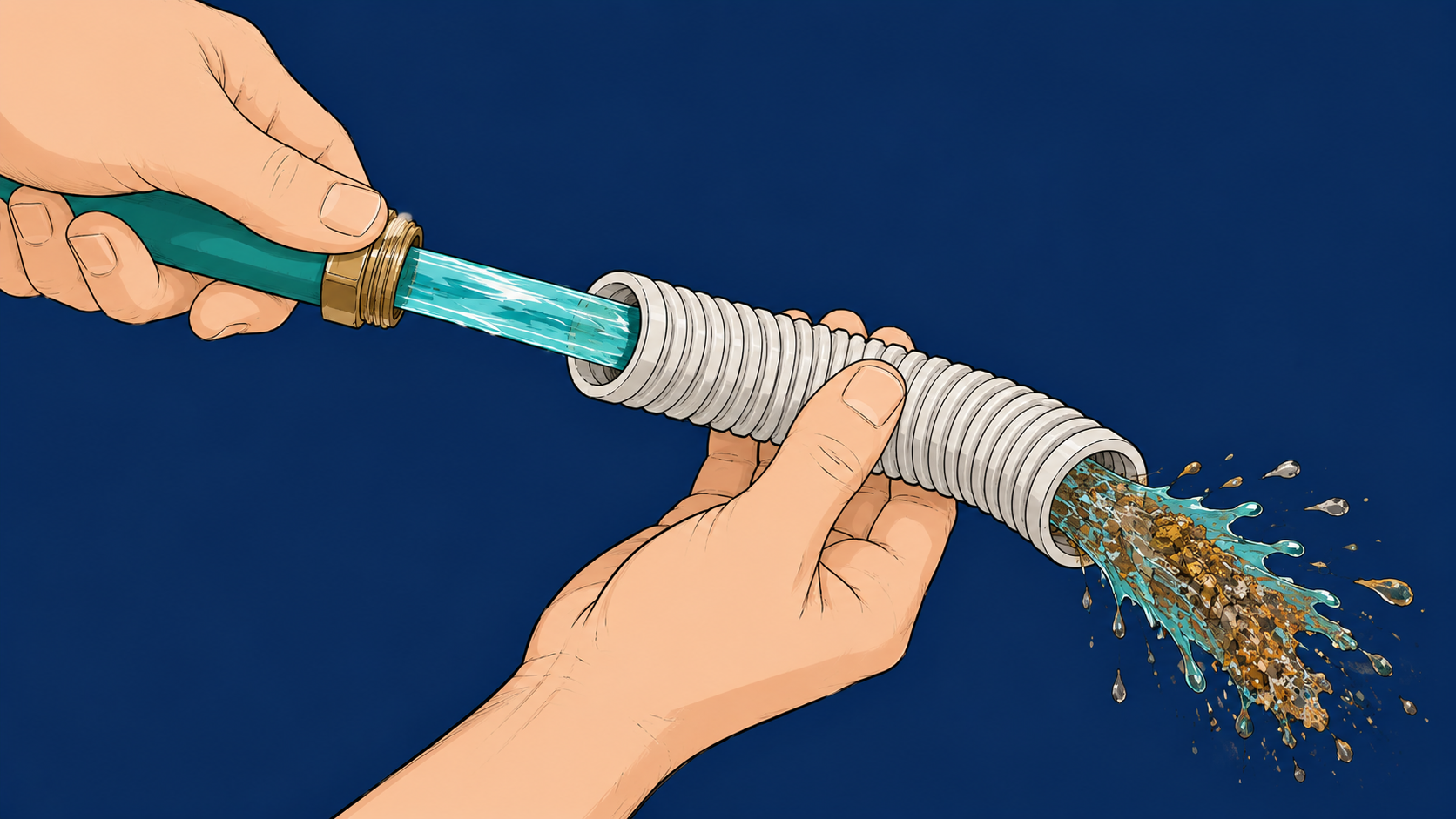
Method 1 — Garden hose flush (fastest): Take the disconnected drain hose outside or to a utility sink. Insert a garden hose into the disposal end and run full pressure water through it. On most clogs this dislodges the blockage in under 30 seconds. A gray-brown paste will flush out — that’s emulsified grease that has been accumulating since installation.
Method 2 — Bottle brush (for stubborn clogs): A long flexible bottle brush scrubs the inside of the corrugated hose. Work it in from both ends. The corrugations trap grease in the ridges, so thorough scrubbing is more effective than a single flush on heavily built-up hoses.
Method 3 — Replace the hose: If the hose is more than five years old, heavily discolored inside, or has visible cracks in the corrugation, replacement is faster and more reliable than cleaning. Replacement drain hoses run $10–$25 and are sold by brand at PartSelect. On our 2018 Frigidaire install, the original hose was stiff enough after four years that I replaced it rather than cleaned it.
Step 5: Check and fix the high loop before reconnecting
This is the step most guides skip — and it’s the reason drain hoses clog faster than they should. The drain hose must be routed in a high loop — arcing up near the underside of the counter before coming back down to the disposal or drain connection. Without the high loop, dirty water from the sink siphons back into the hose between cycles, depositing grease and debris inside the hose every time you run the sink. A hose installed without a high loop will clog again within one to two years.
Before you reconnect, route the hose up to the top of the cabinet interior and secure it with a zip tie or a hose clamp screwed to the underside of the counter. The loop should be as high as possible — ideally within two inches of the countertop underside.
Step 6: Reconnect and test
Slide the hose back onto the disposal inlet or drain tailpiece fitting. Push it on fully — it should seat firmly over the barb. Slide the hose clamp back over the connection point and tighten it down until snug. Don’t overtighten — you’ll crack the hose or fitting. Restore power to the dishwasher and run a short cycle. Stay near the kitchen for the first cycle and check under the sink for any drips at the reconnection point after the drain phase runs.
If the dishwasher drains fully and cleanly, you’re done. If it still doesn’t drain, the blockage was not in the hose — return to the full dishwasher not draining diagnosis guide to work through the other causes.
How to prevent the drain hose from clogging again
1. Scrape plates before loading. The less food fat enters the dishwasher, the less reaches the hose. This is the single most effective prevention.
2. Run hot water at the sink before starting the dishwasher. Hot water arriving first keeps grease in liquid form so it flushes out rather than depositing. Karen figured this out — she runs the hot tap for 30 seconds before hitting start and our filter stays cleaner longer as a result.
3. Run a cleaning cycle monthly. A dishwasher cleaning tablet or a cup of white vinegar in the bottom of the tub during a hot cycle dissolves grease buildup in the hose before it becomes a clog.
When to call a technician
If the hose is clear, the disposal is running, and the dishwasher still won’t drain after a fresh test cycle — the problem is elsewhere. Work through the pre-call checklist before booking a service visit. If you see water backing up into the sink even after clearing and reconnecting the hose, that’s a main drain line blockage — a plumber’s job. If the hose fitting on the disposal or dishwasher pump outlet cracked during disconnection, replace the fitting before reconnecting — cracked fittings leak under pressure.
Frequently asked questions
How do I know if my dishwasher drain hose is clogged vs. something else?
Disconnect the hose at the disposal end and blow through it from the dishwasher end. If you feel significant resistance or can’t blow air through it, the hose is clogged. If air passes freely, the problem is elsewhere — start with the filter, then check the pump impeller. Use the diagnosis tool if you’re unsure which problem you have.
Can I use drain cleaner to unclog a dishwasher drain hose?
No. Chemical drain cleaner damages the rubber and plastic components of the dishwasher and is ineffective on the grease-type blockages that form in dishwasher drain hoses. Use hot water pressure or a bottle brush only.
How often should I clean my dishwasher drain hose?
Most hoses need cleaning every 2–3 years under normal use. If you notice gradual drainage slowdown rather than a sudden failure, cleaning the hose annually will prevent full blockages. Running monthly dishwasher cleaning cycles significantly extends the interval.
My dishwasher drain hose keeps clogging — what am I doing wrong?
The most common cause of recurring clogs is a missing or inadequate high loop. Without the high loop, sink water siphons back into the hose between cycles and deposits a new layer of grease every day. Fix the high loop and the recurrence stops. The second most common cause is not scraping plates before loading.
How much does it cost to replace a dishwasher drain hose?
The hose itself costs $10–$25 on PartSelect depending on brand and length. The job requires no special tools and takes about 30 minutes. A plumber or appliance tech will charge $75–$150 in labor to do the same job — always worth doing yourself on this one.
The grease buildup that was quietly narrowing our Frigidaire’s drain hose had been accumulating since the day it was installed — slow enough that we didn’t notice the drainage getting worse, sudden enough that it looked like a pump failure when it finally blocked. Flush the hose, install the high loop, scrape the plates. Three things that add up to never dealing with this again.
Let's Find the Guide.