Bosch Dishwasher Not Draining? The Fix Most Guides Miss
Bosch dishwasher not draining? The two-piece filter and a stuck check valve are the real culprits — here’s the exact fix including E24 and E25 error codes.
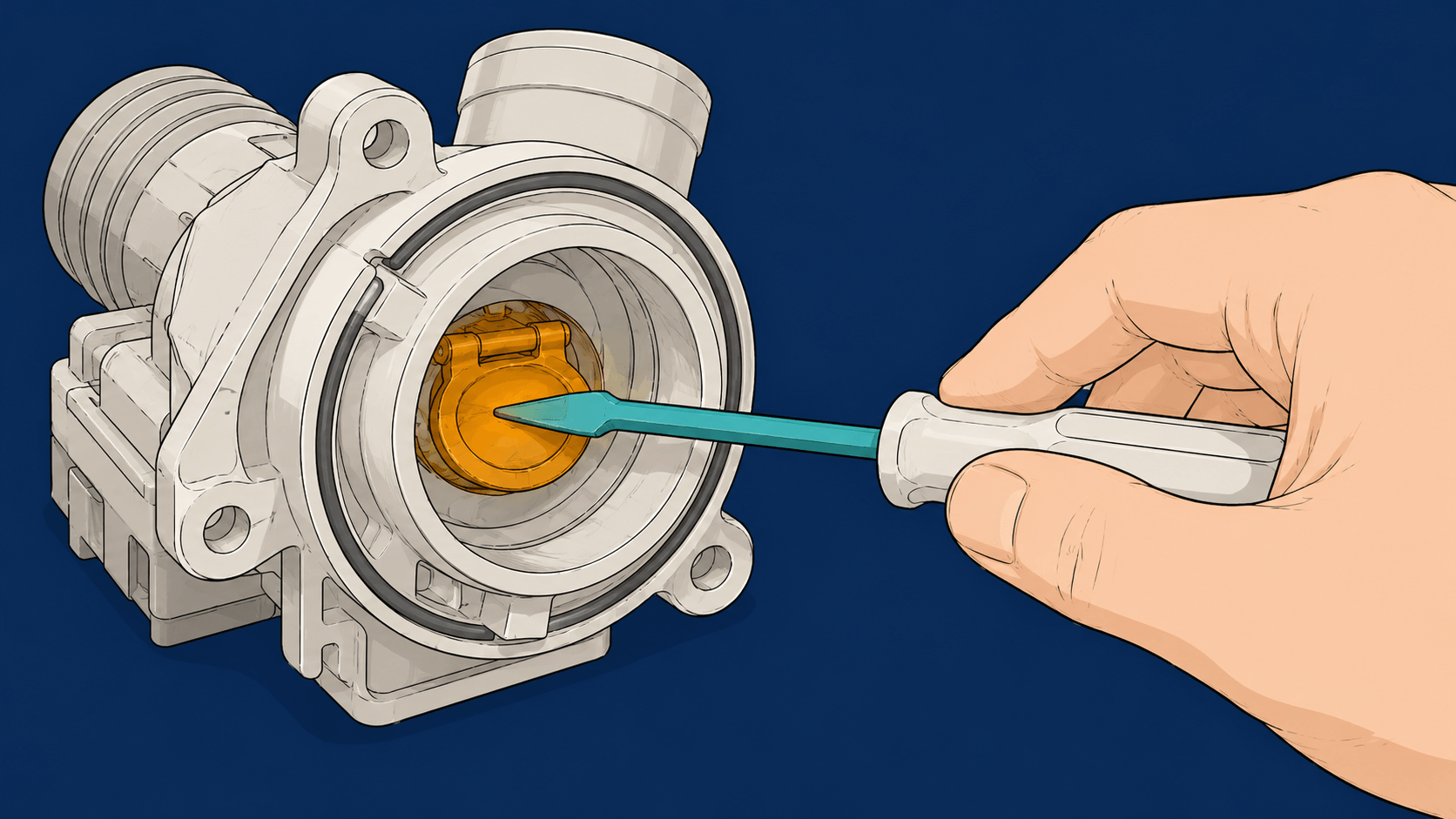
Dave next door — retired HVAC tech, fixes everything — called me over last spring to look at his Bosch 500 Series sitting with an inch of water in the tub. He’d already cleaned the filter. He’d already checked the drain hose. He was ready to call a tech. I tapped the pump housing once with a screwdriver handle and it drained completely. The check valve had stuck closed.
A Bosch dishwasher that won’t drain is almost always one of three things: a clogged two-piece filter system where most people only clean half of it, a stuck check valve at the pump outlet, or an E24/E25 error caused by a blocked drain path. Clean the complete filter assembly first — both the cylindrical filter and the flat mesh screen — before touching anything else.
Why Bosch is different from every other brand
Bosch dishwashers have two specific design features that make their drainage problems unique — and that most repair guides don’t cover correctly.
First: the filter. Bosch uses a fine-mesh cylindrical filter inside a coarser flat mesh screen. The cylindrical filter is what everyone cleans. The flat screen underneath is what actually catches the fine particles — and it’s the one that clogs. On Dave’s Bosch 500, the flat screen looked clean at a glance; up close under a flashlight it was completely glazed with a thin film that had dried to the mesh. Hot water alone wouldn’t shift it.
Second: the check valve. Bosch dishwashers have a rubber check valve at the pump outlet that prevents drain water from flowing back into the tub. After several years of use, this valve can stick in the closed position — not broken, just stuck. The symptom looks exactly like a pump failure: humming, no drainage, nothing obvious blocking the filter. But the fix takes about ten seconds. This is the issue that the iFixit community has documented extensively and that almost no mainstream guide mentions.
Step 1: Clean both filter pieces — the right way
Open the dishwasher and pull the bottom rack all the way out. At the bottom center of the tub you’ll see a round filter assembly. On Bosch models it’s a gray or black cylindrical filter with a small handle or tab — twist it counterclockwise about a half turn and lift straight out.
Now look at what’s left: a flat circular mesh screen sitting flush with the tub floor. On Bosch models this screen does not have a handle — it lifts out by pressing one edge down slightly so the opposite edge rises, then lifting. Some owners never know this piece exists.
Both pieces go under hot running water. The cylindrical filter usually rinses clean in 30 seconds. The flat mesh screen needs a soft brush — a toothbrush works — with dish soap. Run the brush in small circular motions over the entire mesh surface. Hold it up to a light: you should be able to see light through every part of the mesh. If any section looks opaque or glazed, keep scrubbing. Reinstall the flat screen first, then seat the cylindrical filter and twist clockwise to lock. This fixes drainage on Bosch dishwashers roughly 65% of the time.
Step 2: Check the check valve — the fix most guides skip
If the filter is fully clean and the dishwasher still won’t drain — or drains only partially — the check valve is the next thing to address. This is the insight Dave and I pieced together after his Bosch 500 stumped both of us initially.
The check valve is a small rubber flap or ball valve located at the pump outlet inside the pump housing. Its job is to prevent water from flowing back into the tub after the pump runs. After three to five years of use, the rubber can become sticky or slightly deformed and hold itself closed even when the pump is trying to push water out.
To free a stuck check valve: with the dishwasher off and unplugged, remove the filter assembly. You’ll see the pump impeller area below. With a flashlight, locate the check valve — on most Bosch models it’s a small rubber flap just past the pump outlet. Use a flathead screwdriver to gently press and release the flap several times. You’re not forcing it — just breaking the surface tension that’s holding it closed. On Dave’s Bosch, one firm tap on the pump housing from the outside was enough. Reinstall the filter, run a cycle. If it drains, that was the issue.
If the check valve is visibly cracked or warped rather than just stuck, it needs replacement. Bosch check valve assemblies run $12–$25 on PartSelect and are model-specific — have the model number from the door jamb sticker ready before ordering.
Step 3: Read the error code before assuming pump failure
Bosch dishwashers display drainage error codes that tell you exactly what the machine thinks is wrong. E24 means the drain is blocked — the machine tried to drain and couldn’t push water out. Start with the filter and check valve. E25 means the drain pump impeller is blocked or jammed — the pump motor ran but the impeller couldn’t turn.
To clear the error and reset the drain cycle on most Bosch models: hold the Start button for 3–5 seconds until the display resets, then run a short cycle.
The E25 specifically requires checking the impeller. With the dishwasher unplugged and filter removed, reach into the sump and try to spin the pump impeller with your finger. If it won’t turn, there’s debris jamming it — remove it with needle-nose pliers carefully. I found a piece of broken wine glass stem in a friend’s Bosch SHE65T55UC impeller that had been slowly grinding down the pump seal for months.
Step 4: Check the drain hose and high loop
If filter, check valve, and error codes have all been addressed and the dishwasher still won’t drain, check the physical drain path. On Bosch dishwashers the drain hose connects at the left-rear of the unit and routes under the sink. Unlike some brands, Bosch drain hoses are semi-rigid rather than fully corrugated — they kink less often but can develop partial blockages from grease buildup on older installations.
Disconnect the drain hose at the disposal end, have a towel ready, and blow through it. Significant resistance means a partial clog — flush it from the disposal end with a garden hose. Also confirm the drain hose has a high loop: it should arc up near the underside of the counter before coming back down. Without the high loop, sink water can siphon back into the dishwasher and create what looks like a drainage problem but is actually a backflow problem. For the full breakdown of every cause of a dishwasher not draining, see the complete diagnosis guide.
When to call a technician
Call a licensed tech if the pump impeller is clear, the check valve has been freed or replaced, the filter is clean, and the E25 error keeps returning. That pattern indicates the drain pump motor windings have failed. Test with a multimeter — look for 5–30 ohms resistance between the motor terminals. An OL reading means pump replacement. Bosch drain pump assemblies (part series 263740, 12019637) run $50–$65. The job requires pulling the unit out and tilting it on its back — about 90 minutes total. Work through the pre-call checklist before booking a service visit.
Frequently asked questions
Why is my Bosch dishwasher not draining but there’s no blockage?
The most likely cause is a stuck check valve — a rubber flap at the pump outlet that can hold itself closed without any visible blockage. With the unit unplugged and filter removed, use a flathead screwdriver to press and release the check valve flap several times to break the surface tension. Also check for E24 or E25 error codes. Use the diagnosis tool if you’re unsure which problem you have.
What does E24 mean on a Bosch dishwasher?
E24 means the drain is blocked — the machine tried to drain and water couldn’t exit. Start with the full filter assembly (both the cylinder and the flat mesh screen), then check the drain hose for kinks, then check the check valve. Clear the code by holding the Start button for 3–5 seconds.
What does E25 mean on a Bosch dishwasher?
E25 means the drain pump impeller is blocked or jammed. Remove the filter and look into the pump sump — you’re looking for broken glass, fruit pits, or small debris that’s preventing the impeller from turning. Try spinning the impeller with your finger. If it won’t turn, remove the obstruction with needle-nose pliers before running the machine again.
How do I clean the Bosch dishwasher filter correctly?
Remove both pieces — the cylindrical filter that twists counterclockwise, and the flat mesh screen underneath that lifts straight out. Clean both under hot water with a soft brush. Most people only clean the cylinder and miss the flat mesh screen entirely, which is where the fine-particle buildup that causes drainage problems actually accumulates.
Bosch dishwasher not draining fully — what’s the cause?
Partial drainage usually means a partially clogged flat mesh screen or a partially stuck check valve. The pump has enough power to push some water out but not all of it. Clean the full filter assembly first. If partial drainage continues after that, free the check valve as described in Step 2 above.
Dave’s Bosch drained in ten seconds once the check valve was freed. He’d been ready to pay $150 for a service call. The fix was a screwdriver tap and thirty seconds of knowing where to look — which is exactly what most guides don’t tell you.
Let's Find the Guide.