How to Unclog a Dishwasher Drain Hose: 6 Safe Steps
Dishwasher drain hose clogged? Check the disposal connection, kinks and air gap, then safely clean or replace the hose with this step-by-step guide.
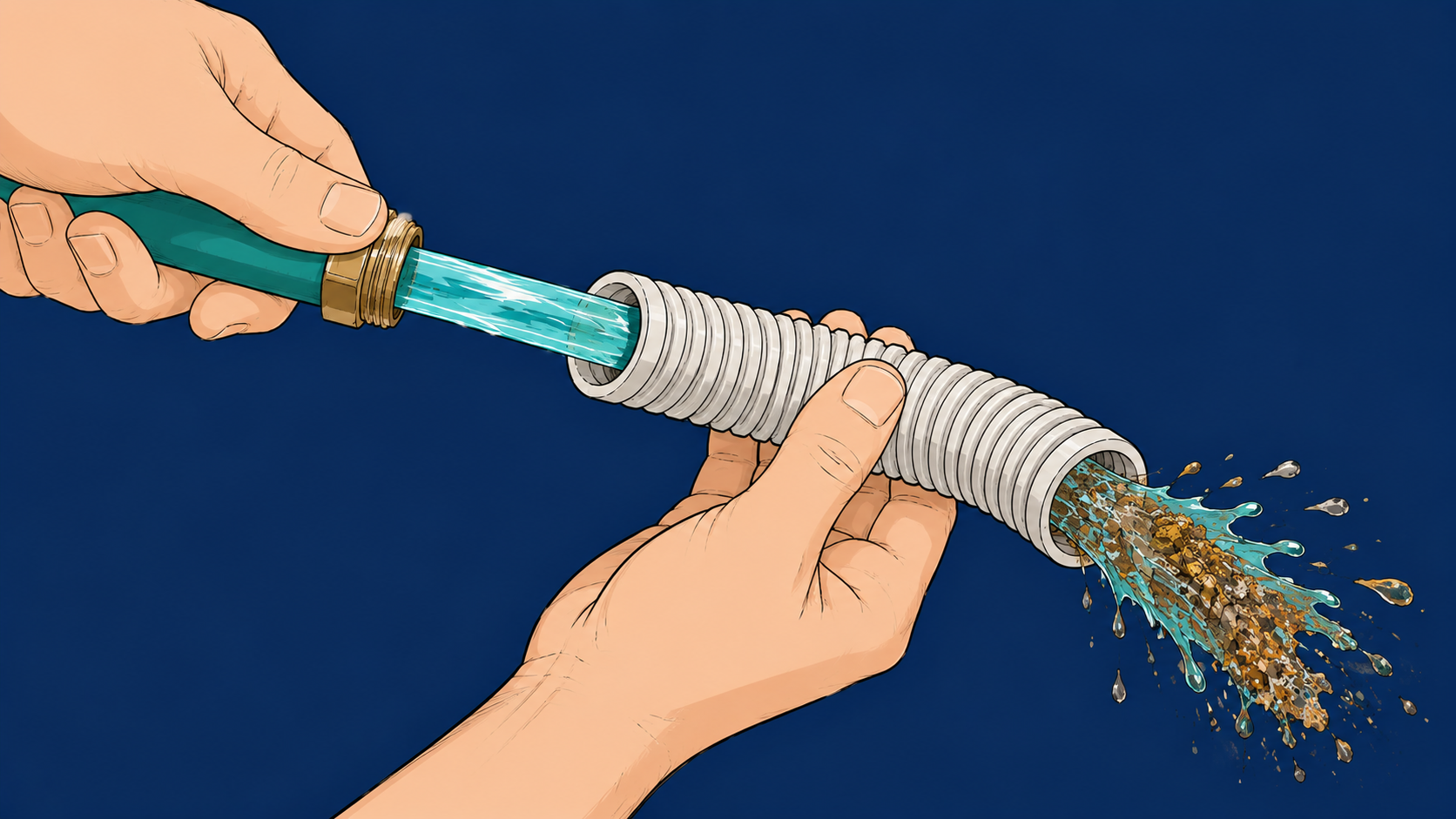
To unclog a dishwasher drain hose, first rule out a blocked sink or garbage-disposal connection and check for a kink. If the hose itself is obstructed, disconnect its accessible sink end with power isolated, catch the water in a bucket, inspect the opening, and gently flush or replace the hose according to your appliance’s installation instructions. Do not blow through a used hose by mouth or use high-pressure water.
Safety first: Switch off power to the dishwasher and the garbage disposal before working near either appliance. Allow hot water to cool, wear gloves, and place towels under the connection. Do not disconnect electrical wiring or pull a built-in dishwasher out of the cabinet unless you can do so safely. If the hose has been exposed to chemical drain cleaner, do not open it yourself; consult a professional.
Signs your dishwasher drain hose may be clogged
- Standing water remains on the tub floor after the drain cycle.
- Water leaves slowly, or the dishwasher reports a drain-related error.
- The filter is clean, but drainage is still restricted.
- You can see a kink, compressed section or buildup near the sink connection.
These signs are not proof of a hose clog. The sink drain, dishwasher filter, drain pump, air gap or installation may produce similar symptoms. For broader diagnosis, see why a dishwasher does not drain.
Tools and materials
- Bucket or shallow pan and absorbent towels
- Protective gloves and flashlight
- Screwdriver or nut driver suitable for the hose clamp, if applicable
- Soft, flexible cleaning brush approved for the hose, if removable
- Replacement dishwasher drain hose and clamp if the existing hose is damaged
Step 1: Check the sink drain, disposal connection and visible hose
- Check whether your sink drains normally. If the sink is backed up, resolve that plumbing problem before assuming the dishwasher hose is clogged.
- If a garbage disposal was just installed, check that its dishwasher inlet knockout plug was removed during installation. Follow the disposal manufacturer’s instructions with the power isolated.
- Look for a kink or crushed section under the sink. Straighten only visible sections without pulling or stretching the hose.
- If the installation uses a countertop air gap, inspect and clean it following the air-gap manufacturer’s instructions.
If one of these checks restores drainage, the hose may not need to be disconnected.
Step 2: Isolate power and prepare for water
Turn off the dishwasher at the breaker or unplug it, and isolate the garbage disposal if fitted. Make sure the dishwasher cannot start. Lay towels in the sink cabinet and place a bucket under the hose connection. Residual wastewater may drain out when the hose is removed. Wear protective gloves and avoid splashing.
Step 3: Disconnect the accessible sink end
Identify where the dishwasher drain hose connects to the disposal inlet or the dishwasher branch on a sink tailpiece. Connections vary: a hose clamp may be secured by a screw or spring mechanism. Loosen it with the correct tool, then gently remove the hose from the fitting over the bucket. Do not pull hard on a brittle hose or plastic drain fitting.
If the hose cannot be reached without shifting a hardwired or tightly plumbed dishwasher, stop and request appliance-service help. You do not need to remove the appliance to check most accessible sink connections.
Step 4: Inspect and clear the restriction gently
- Check the exposed hose opening and the sink-side inlet for visible food debris or buildup. Remove accessible material with gloves or a suitable soft tool.
- If your appliance instructions permit flushing the hose, guide the disconnected end into a bucket or utility sink and use a gentle flow of clean water. Avoid forcing water backward toward the dishwasher or applying mains-pressure water directly to an attached hose.
- For a removable hose, a soft flexible brush may help loosen buildup. Do not use a metal drain snake or sharp wire that could puncture the hose.
- If the hose is split, brittle, permanently flattened or cannot be cleaned without force, replace it with a manufacturer-compatible hose.
Do not blow by mouth through a wastewater hose, use a pressure washer or force a garden hose into the fitting. Avoid household drain-opening chemicals, which can be hazardous and damage components.
Step 5: Restore the required high loop or air-gap routing
Check your dishwasher’s installation guide and local plumbing rules. Some installations use an approved air gap; others use a high loop secured high under the countertop. The exact routing and height are model- and code-dependent. Do not remove a required air gap or introduce a tight bend while securing the hose.
The high loop or air gap helps reduce backflow risks. It does not guarantee that a hose can never clog again, so avoid claims that changing the loop alone prevents every future blockage.
Step 6: Reconnect, secure and leak-test
- Reconnect the hose fully to the proper barbed inlet or fitting, using a sound clamp in the correct position.
- Make sure the hose is not kinked, stretched or rubbing against a sharp cabinet edge.
- Check every disturbed plumbing connection and restore power only after everything is reassembled.
- Run the model’s cancel/drain procedure or an appropriate short cycle. Watch under the sink for leaks while water drains.
If water still remains in the tub, stop repeated testing and return to the full dishwasher drainage checklist. An internal pump fault or another blockage may be responsible.
When replacement or professional repair makes sense
Replace the hose if it leaks, has damaged corrugations, remains obstructed after gentle cleaning or is incompatible with the existing fitting. Use your dishwasher’s full model number and its parts diagram to identify the correct assembly; there is no universal size, installation time or price.
Contact a professional if you discover leaking fittings, inaccessible connections, sewage backflow, an electrical issue, or persistent failure to drain after cleaning. A plumber may be appropriate for a blocked shared sink drain, while an appliance technician can assess the drain pump or internal dishwasher lines.
Preventing repeat drain restrictions
- Clean the removable dishwasher filter at the interval specified in the owner manual.
- Scrape large food scraps from dishes and use only dishwasher-approved detergents.
- Keep the sink drain and garbage-disposal connection clear.
- Check that hose routing remains secure after moving items under the sink.
- Use only dishwasher-cleaning products and procedures recommended for your appliance.
Frequently asked questions
How can I tell whether the dishwasher drain hose is blocked?
Standing water alone does not identify a hose clog. First check the filter, sink drain, disposal inlet and visible hose for restrictions. If those are clear, a technician or a safe inspection of the disconnected hose may help isolate the problem.
Can I use chemical drain cleaner in a dishwasher hose?
No. Chemical drain-opening products can injure you and may damage dishwasher parts. Never mix cleaners or open a hose containing drain chemicals without professional guidance.
Can I flush the hose with a garden hose?
A powerful or sealed water connection can damage the hose or push water into the appliance. If the manufacturer allows it, use a gentle, controlled rinse on an appropriately disconnected hose instead.
Does a dishwasher drain hose need a high loop?
Follow the exact dishwasher installation instructions and applicable plumbing code. The installation may require a high loop, an air gap or a particular routing arrangement.
How often should a dishwasher drain hose be cleaned?
There is no universal replacement or cleaning interval for all models. Maintain the dishwasher filter and sink drain regularly, and inspect the hose if drainage slows, a leak occurs or the manufacturer recommends a check.
Related repair guides
- Dishwasher not draining: seven possible causes
- Bosch dishwasher not draining
- Frigidaire dishwasher not draining
- Whirlpool dishwasher not draining
Editorial note: General dishwasher plumbing guidance; follow the appliance and disposal installation manuals for exact connections and safety requirements. This article does not claim unverified personal repairs or guaranteed fixes.
Let's Find the Guide.